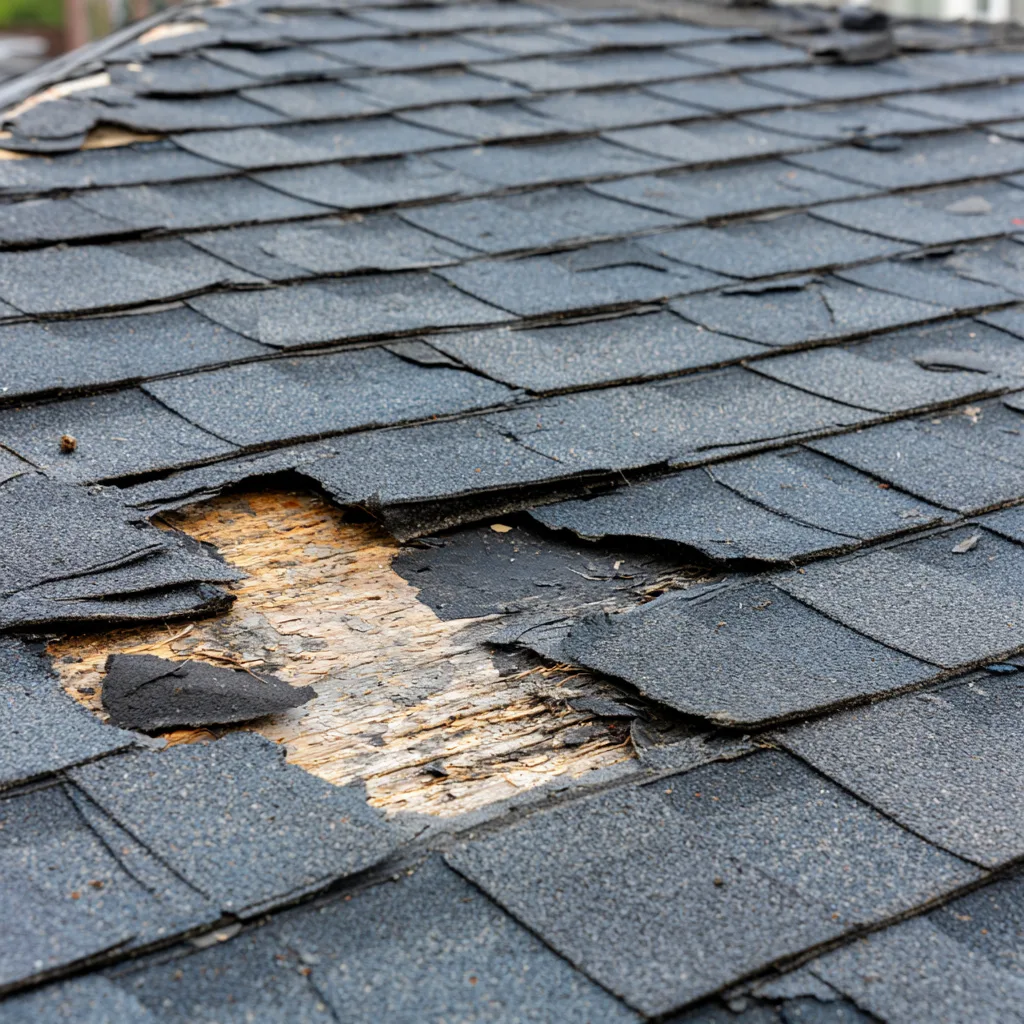
Emergency Roof Repair in Hurst, TX
Water entering now or roofing left exposed needs prompt attention. Call with the property location and the active problem so the next step can be discussed.
Get help with an active Hurst roof problem
A roof opening during rain creates two jobs: limit further exposure where it is safe to do so, then rebuild the part of the roof that failed. A temporary cover can help with the first job. It does not settle the condition of the shingles, flashing or wood underneath.
Tell us whether water is entering an occupied room, a roof section is uncovered, or a tree or other object has struck the building. Those details help establish the immediate concern and the access needed. Weather and hazards still control when work on the roof is possible.
We discuss practical roofing help without asking you to climb up or diagnose the damage. If the situation includes a collapse risk, fire, a downed power line or another immediate danger, move clear and seek the appropriate emergency assistance first.
Put people clear of the immediate hazard
Stay on the ground and put distance between people and the hazard. A wet roof and an apparently small opening can both be unsafe to approach.
- Sagging or falling ceiling material
Keep people and pets out of the affected area. Do not stand beneath it to inspect, drain or support it. A ceiling holding water can fail without giving you a safe warning.
- Wet electrical fixtures or equipment
Avoid touching wet switches, light fittings, outlets and nearby powered equipment. Active electrical danger needs appropriate emergency or utility help; it should not wait for a roofing appointment.
- Objects on the roof or unstable access
Do not move fallen branches near wires or use a ladder against a damaged edge. Tree removal, electrical isolation or structural work may need to happen before a roofer can safely reach the opening.
What temporary roof protection can do
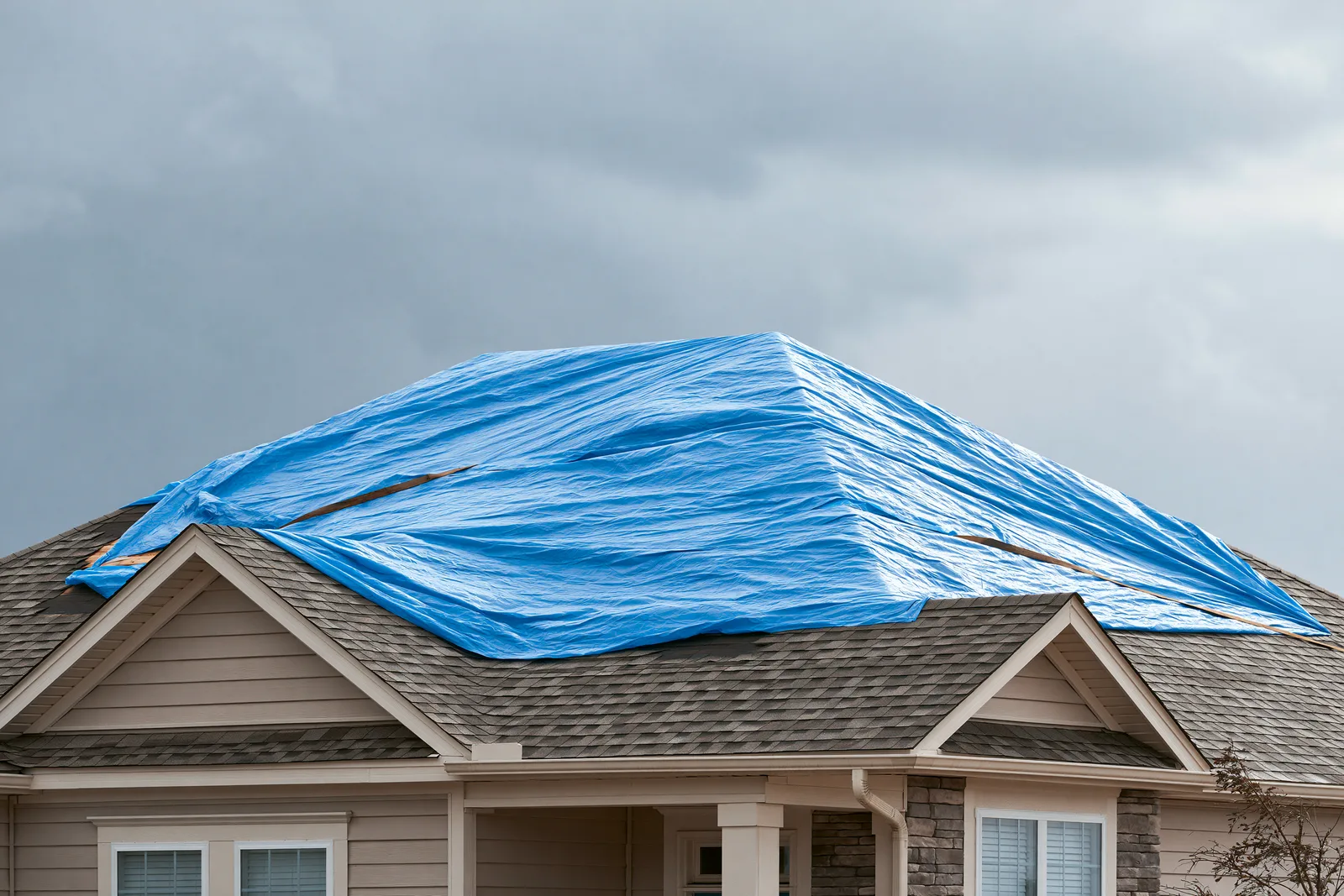
Temporary protection reduces direct exposure while a permanent repair is arranged. The method depends on the opening, the roof material and a safe way to secure it.
- Cover the exposed area without creating another water path
A protective cover needs an appropriate attachment and a route for runoff. Loose edges, an undersized cover or water directed behind the protected area can defeat its purpose. It is professional temporary work, not a reason to send a homeowner onto a wet roof.
- Recognize what protection leaves unresolved
A cover does not repair softened decking, reconnect a failed flashing lap or replace wet insulation. It also needs follow-up: wind, further rain and material movement can change its condition before the permanent job.
- Use the weather window
Rain, gusts, lightning or unstable material can prevent safe installation. The roof has to be accessible and the protection suitable for the conditions. We discuss what can be done as the situation is assessed.
Plan the permanent repair after protection
Once the opening is protected and access is safe, the permanent repair needs a reliable connection to the existing roof.
Inspect beyond the opening
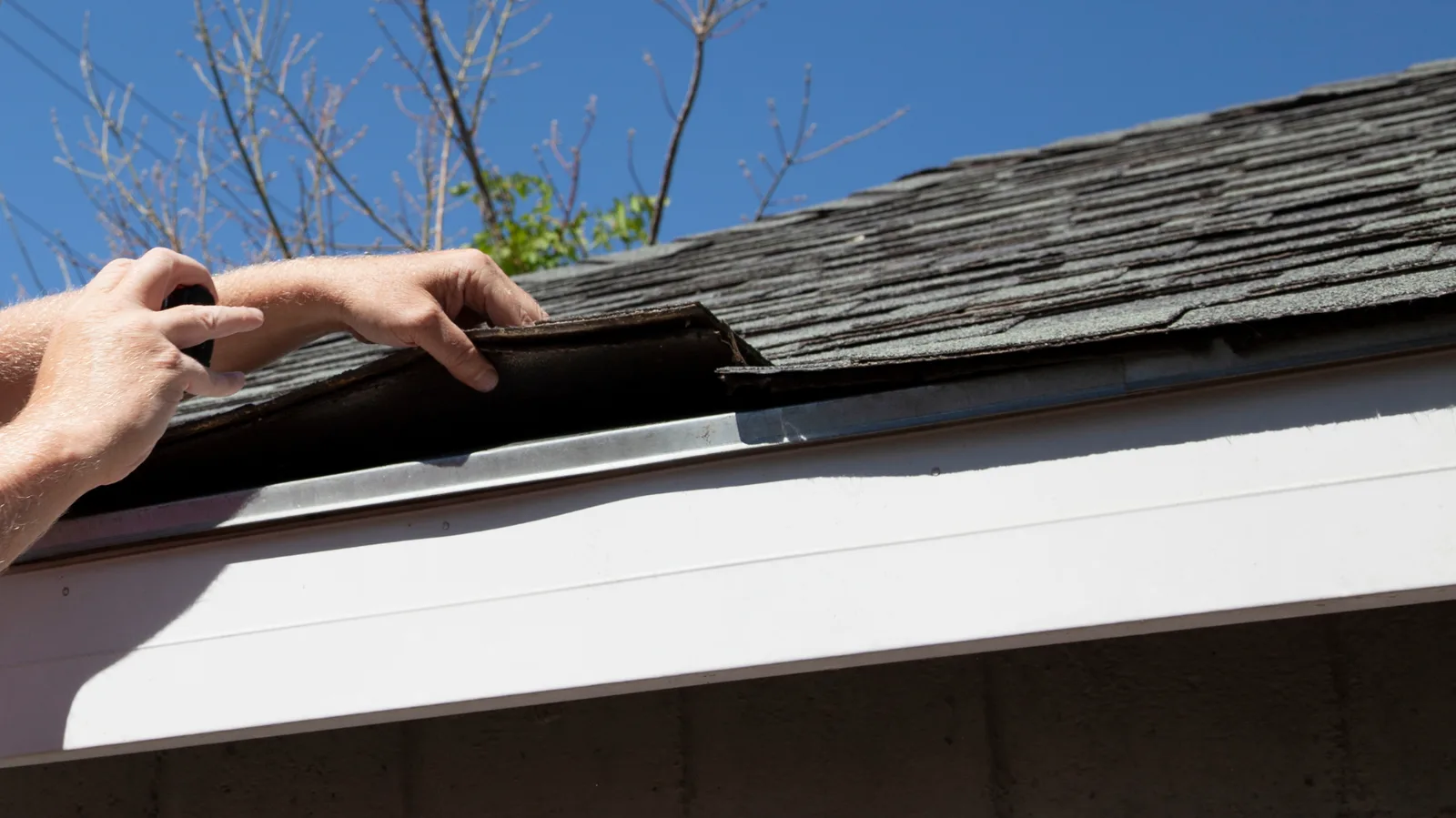
Look at the damaged covering and the material around it. Water may have traveled into wood or other concealed layers beyond what can be seen from outside.
Agree the repair boundary
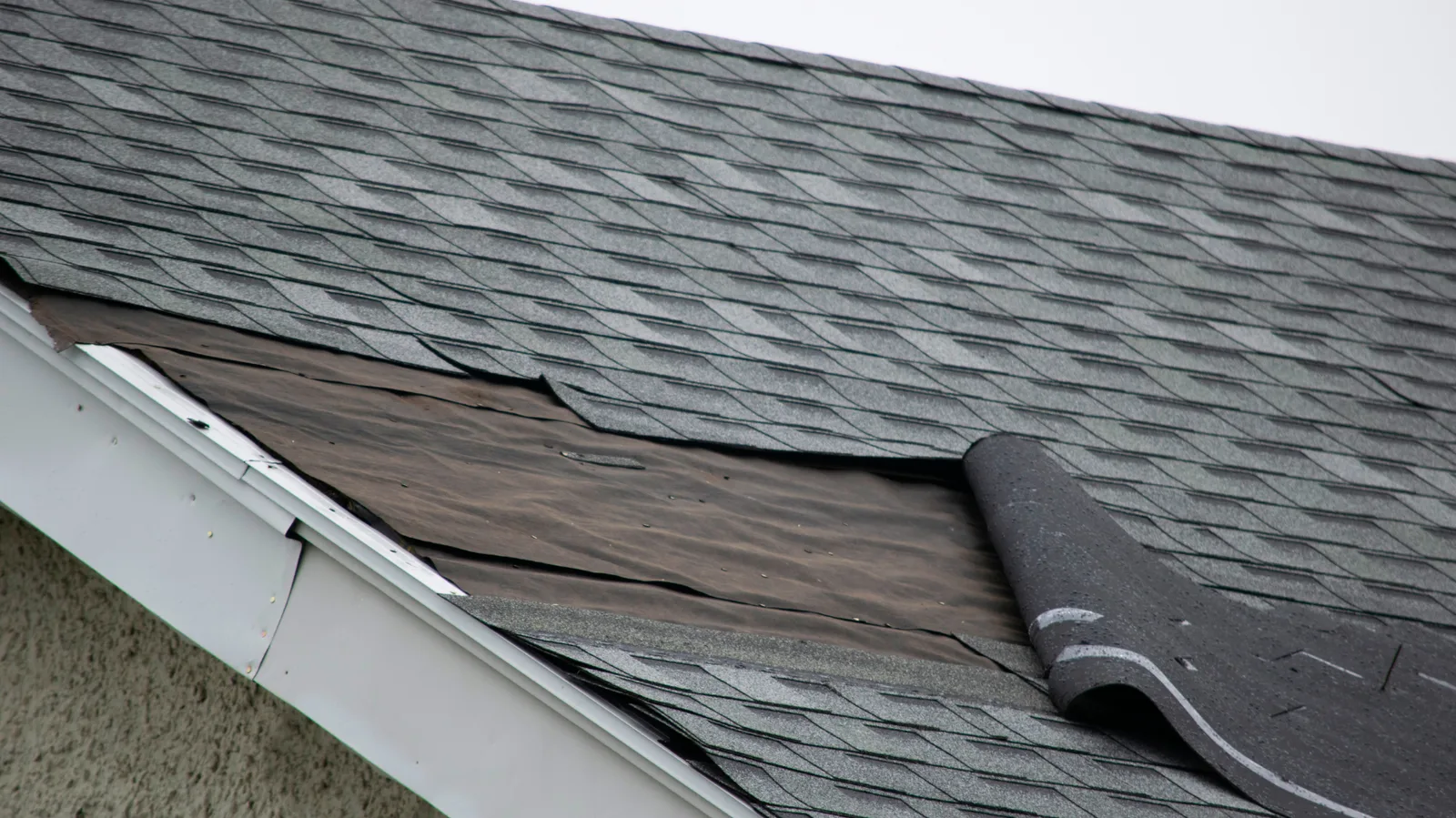
Determine what must be removed and replaced, including flashing and damaged support. If a larger area is unsound, discuss a wider repair or replacement rather than leaving the same weak connection under a new patch.
Rebuild and coordinate follow-up
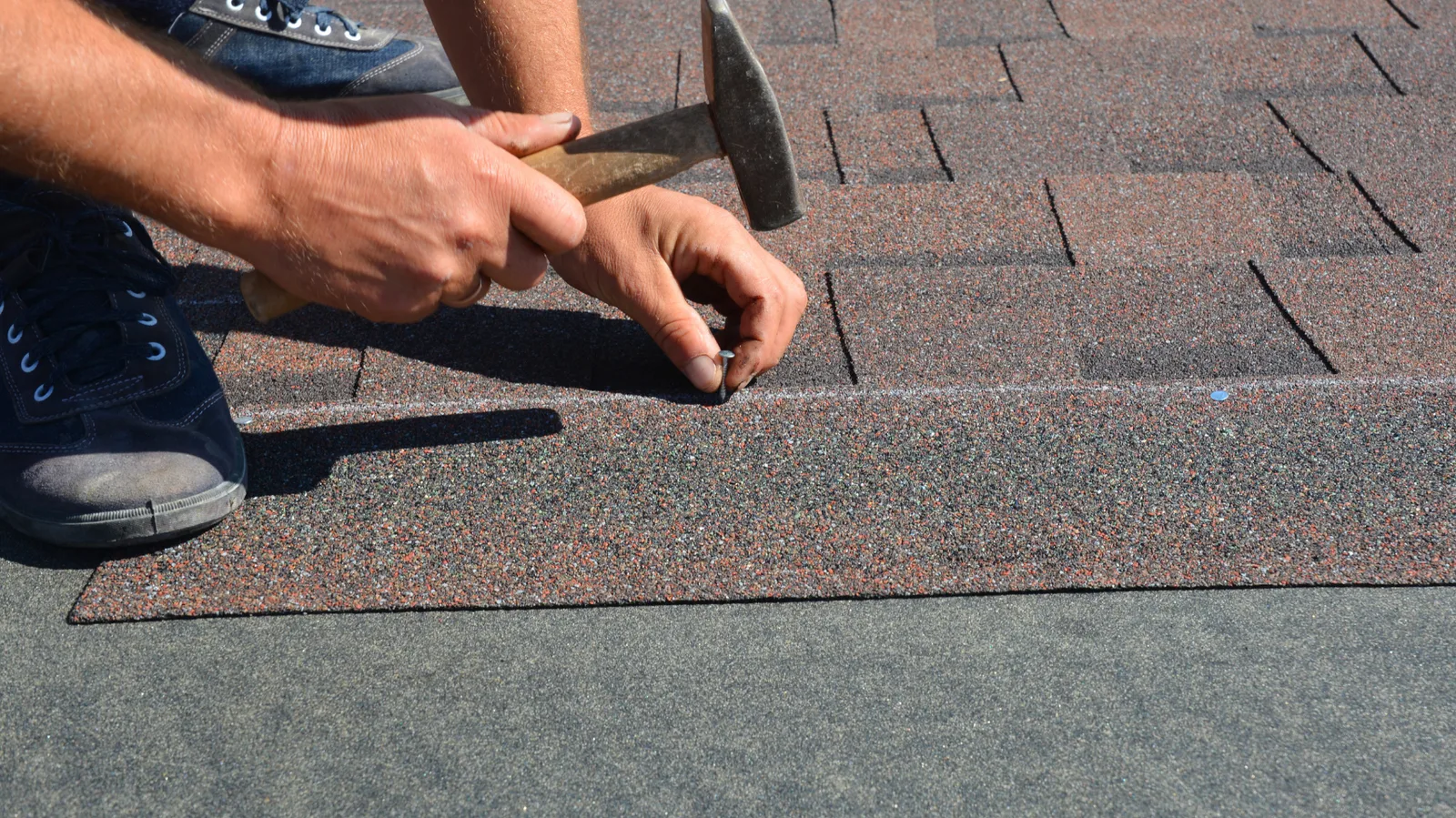
Install compatible layers and restore the roof details. Replaced decking in Hurst still requires its City inspection. Drying, electrical or interior repairs need separate coordination where affected, and room access should be planned around those needs.
What affects urgent repair scope and cost
An urgent situation does not make every repair the same size. The cost follows the safe access, temporary measures and permanent work actually needed.
- Getting to the damage
Height, steepness, unstable areas and storm debris can change the equipment and access required. Conditions can postpone roof work even when the leak itself is urgent.
- The area and layers affected
A small exposed patch over sound wood differs from an opening that has wet or weakened the deck. Inspection and authorized opening of the assembly help establish that extent.
- Keeping the two scopes clear
Temporary protection and the final repair should be identified separately so you know what each achieves. Permit and decking requirements still apply to the work that triggers them; urgency does not erase those checks.
Emergency roof repair FAQs
Can temporary protection be installed in bad weather?
Only when weather and access allow it to be installed safely. High wind, lightning, a wet unstable surface or a structural hazard can prevent work. A promise to climb immediately would ignore the conditions that determine safe access.
Is temporary protection the finished repair?
No. It limits exposure while the permanent roofing work is assessed and arranged. The final repair needs to address damaged covering, flashing and any affected underlying material.
What should I say when water is entering now?
Give the property location, say that water is entering now and name the affected room or part of the building. Mention a sagging ceiling, tree impact or electrical concern if you have already seen one, and stay clear of those hazards.
Should I climb up to cover the roof?
No. Stay off the roof and do not put a ladder against a damaged edge. Slippery surfaces, weakened decking and gusts make improvised covering dangerous. Discuss professional protection when safe access is possible.
Call about the active roof problem.
Describe what is happening and where the property is. We can discuss roof access, temporary protection and the path to a permanent repair.