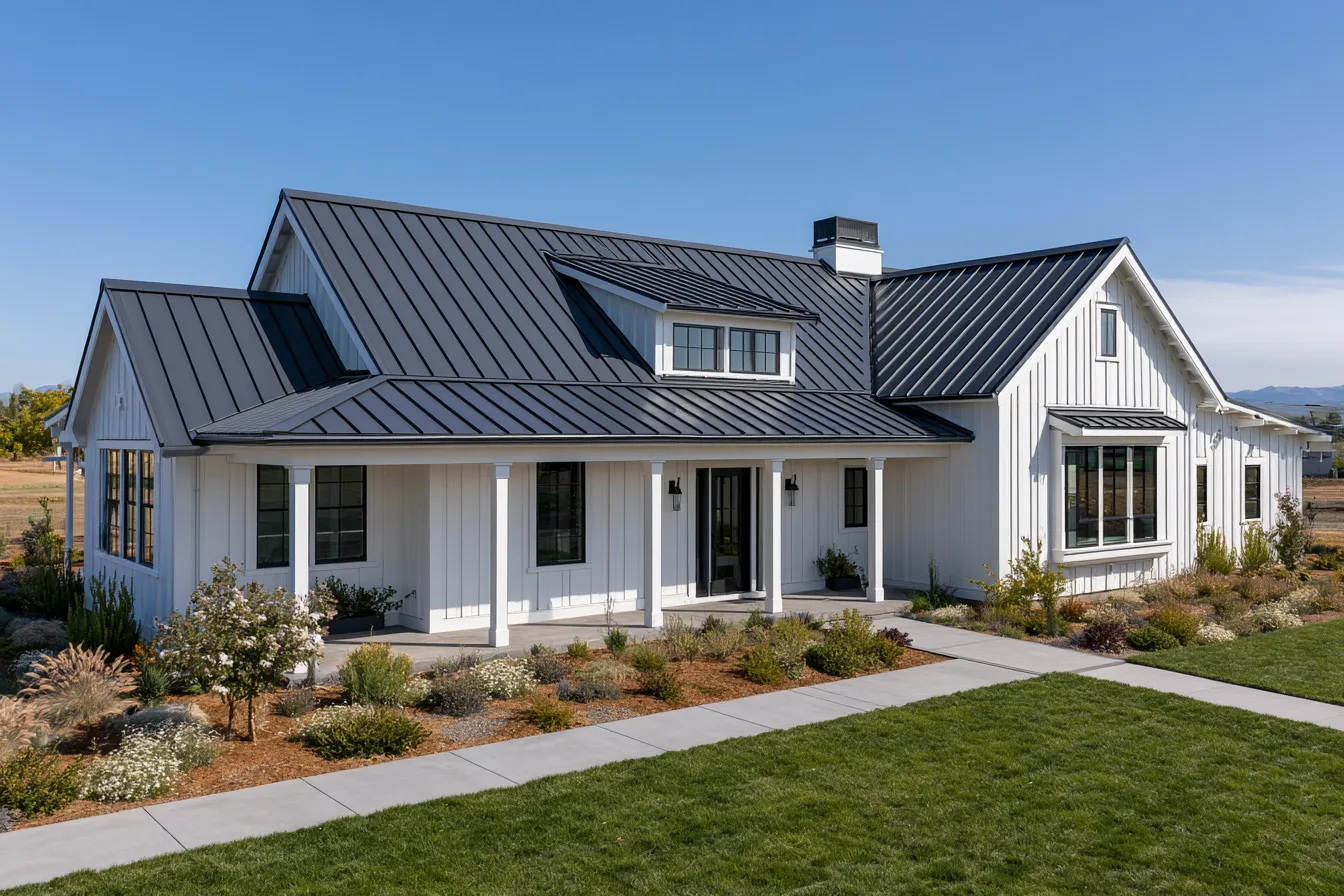
Metal Roofing in Hurst, TX
Panel shape, attachment and roof details matter as much as the finish. Explore metal roofing for a Hurst home, addition or existing panel roof.
Choose a metal roof for the way it will be installed
A metal roof moves as its temperature changes. Its panels, seams, fasteners and perimeter details need to accommodate that movement while keeping water outside. That is why changing to metal involves more than ordering panels in a favorite color.
We start with the roof geometry, support and existing connections. A simple open plane presents a different installation from a roof with valleys, dormers and several wall transitions. An added metal porch roof also needs a deliberate connection to the house above it.
For an existing metal roof, we look at the actual panel system before suggesting a repair. A leak at a screw, an open seam and a poorly flashed pipe are different problems. A free inspection helps put the right system or repair in view.
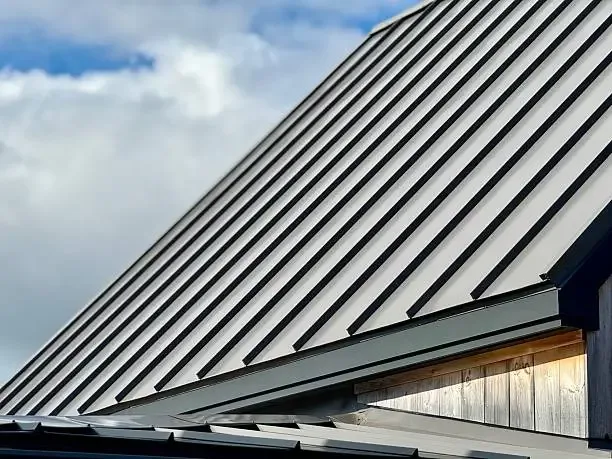
Standing seams and exposed fasteners work differently
These systems attach differently. McElroy Metal’s panel overview describes the distinction; the instructions for the specific panel control its installation.
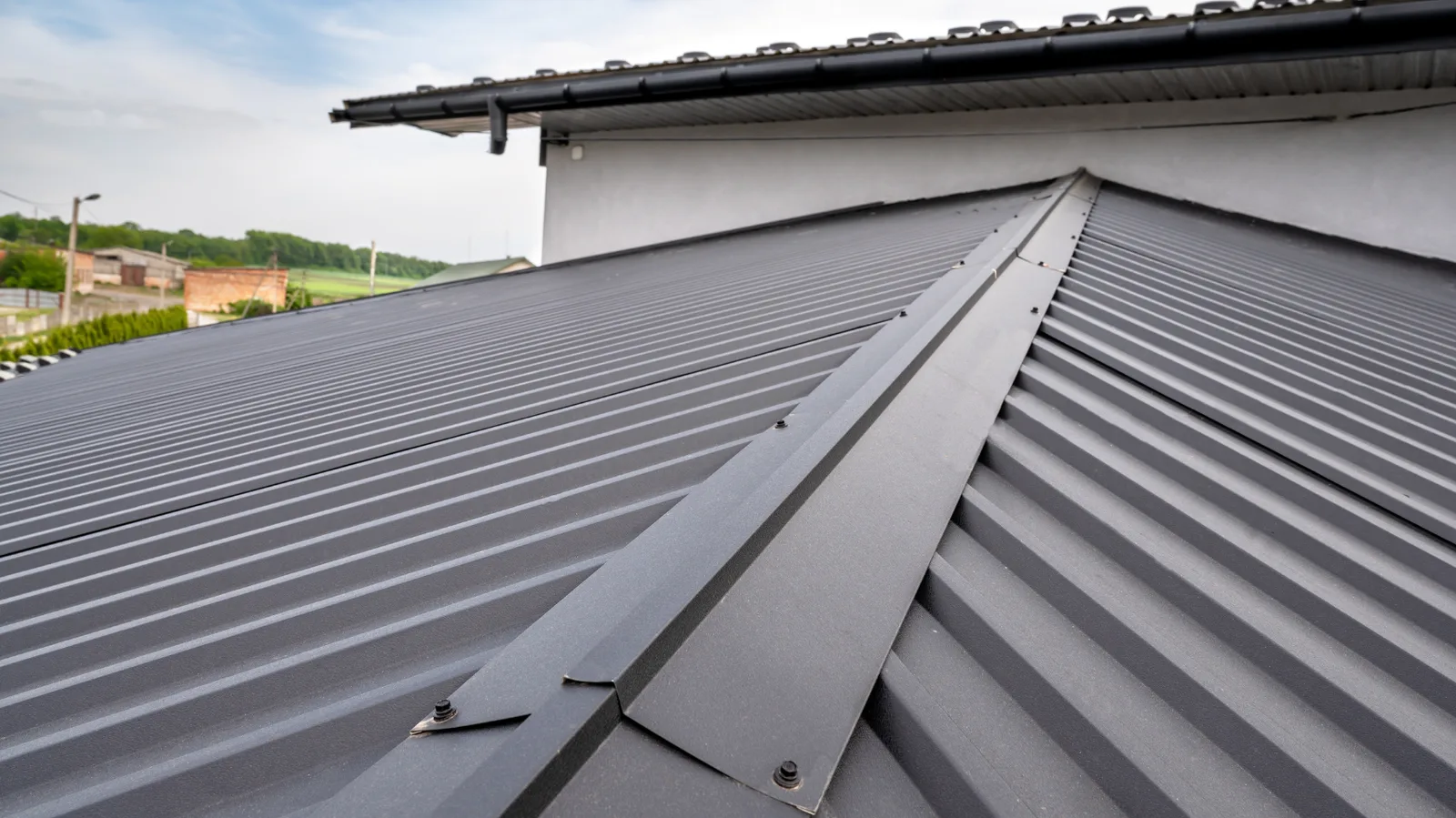
The roof details make the metal system work
Long runs and small roof interruptions need to be designed together. A good field panel can still leak where another component interrupts it.
Allow the intended movement
Panel ends, clips and attachments have to work with expansion and contraction. A rigid added connection in the wrong location can restrict that movement. Equipment or later attachments should use the selected system’s permitted methods.
Use compatible materials and flashings
Contact between unsuitable metals, damaged finishes and an incompatible sealant can create future problems. Pipe boots, valleys, ridge and eave pieces need the correct shape and lap for the roof, including the way the panel drains into the gutter.
Address moisture below the metal
Underlayment, deck condition and the roof-space design matter beneath the covering. Condensation and rain leakage are not the same fault. Ventilation or other moisture-control work may need coordination with the assembly rather than being treated as a coating or screw problem.
Plan metal roofing around the existing house
The existing house sets practical limits and opportunities. We assess those before reducing the project to a metal price per square foot.
- Slope and intersections
The selected product’s minimum slope and detail requirements govern suitability. Valleys, short returns and walls add fabrication and installation work; there is no single slope rule for every metal panel.
- Removal and support
Deck condition, existing roofing layers and attachment requirements determine what can remain. Retaining an old covering is a separate recover decision and must not conceal an unresolved leak or unsuitable support.
- Access and connected work
Long panel handling needs space and a safe delivery route. Gutter edges, porch transitions and rooftop equipment may need related work. We identify those connections and explain the scope, including any other trades needed.
Metal roofing FAQs
Will a metal roof be noisier in rain?
Rain sound depends on the complete assembly, including the deck, underlayment, insulation and interior construction. Metal over an open structure behaves differently from metal over an enclosed insulated home. We discuss the roof assembly rather than promising a particular sound level.
Can metal roofing rust?
Yes, some metals can corrode if their protective finish is damaged or the exposure and adjoining materials are unsuitable. Metal selection, compatible fasteners and care at cut edges and penetrations matter. A painted surface does not make every material combination safe.
Can leaking panel screws be repaired?
Yes, when the cause can be addressed with the correct fastener and a sound substrate. A deteriorated washer, enlarged hole or unsuitable attachment can require different work. Smearing sealant over every screw head does not establish that the panel is properly secured.
Can metal be installed over existing shingles?
Sometimes a specified recover system is possible, but existing condition, layers, weight, ventilation and attachment must be assessed along with local requirements. A new panel should not simply hide wet or unsound material.
Can one porch or addition use metal while the house keeps shingles?
Yes, where the selected system suits that roof and the transition can be detailed correctly. The junction between materials, runoff from the upper roof and the wall flashing all need to be included.
Choose metal with the whole roof in mind.
Tell us whether you are changing materials, planning an addition or dealing with an existing panel leak. A free inspection helps define the right next step.